
Black Drum
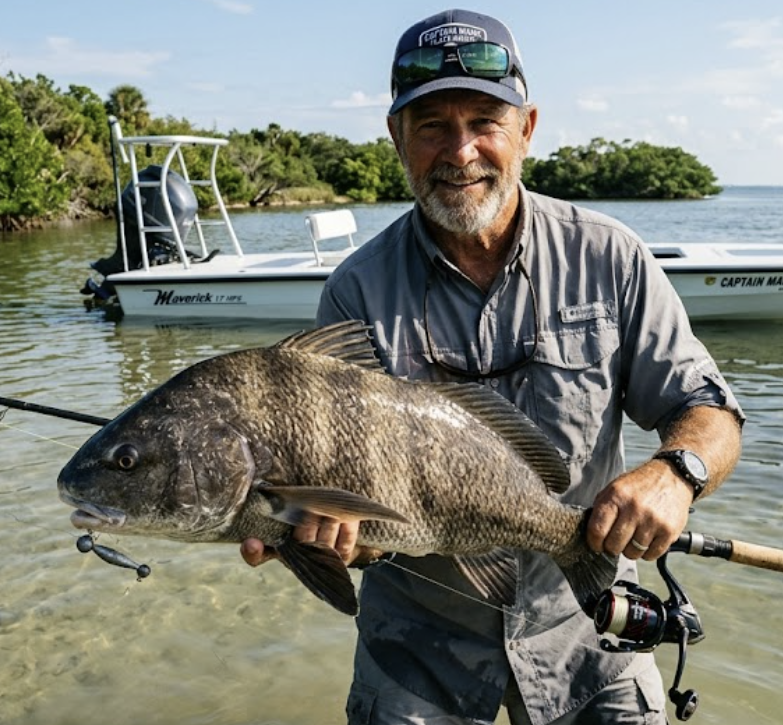
The Shadow Dweller: Inshore Black Drum with Captain Mark
If you’re looking for a hard-pulling, reliable battle on the light tackle, you’re looking for the Black Drum. Often called the “big brothers” of the redfish, these heavy-scaled powerhouses are a staple of the West Florida inshore scene. They might not be as fast as a snook or as flashy as a tarpon, but when you hook a “Big Ugly” in shallow water, you’re in for a grueling tug-of-war that tests every bit of your gear.
Finding the Drum: Structure and Scent
Black Drum are tactile feeders. They use the sensitive barbels under their chins to “feel” for food along the bottom. On our West Coast flats and backcountry, we hunt them in areas where the groceries are plentiful:
-
Bridges and Dock Pilings: This is the classic Black Drum haunt. They hug the pilings, picking off crabs and shrimp. If there’s a barnacle-encrusted structure with a bit of current, there’s likely a drum nearby.
-
Deep Potholes and Channels: During the cooler months or middle of the day, drum retreat into the deeper “potholes” within the grass flats or the edges of residential canals.
-
Oyster Bars and Mud Flats: We often find them “tailing” just like redfish, with their noses down in the mud rooting for crustaceans.
Tackle and Techniques: Strength Over Speed
Black Drum aren’t known for long, blistering runs. Instead, they use their massive weight and sheer strength to try and pin you against the bottom or wrap you around a piling.
For the Fly Angler
This is a game of patience and precise “dinking.”
-
Rod & Reel: An 8-weight or 9-weight rod is necessary to move these fish. They are dense and stubborn.
-
Fly Selection: You want heavy, weighted flies that get to the bottom fast. Clouser Minnows or weighted crab patterns in dark colors like black/purple, olive, or brown work best. The goal is to “hop” the fly right in front of their nose—they won’t chase it down, so the presentation has to be perfect.
For the Light Tackle Angler
-
Spinning Gear: I rig my anglers with 7-foot medium-heavy rods and 20lb braid. Because we are often fishing around sharp structure, a 30lb or 40lb fluorocarbon leader is a must to prevent oyster shells from snapping the line.
-
Lures: Scented soft plastics (like Berkley Gulp) are king here. Since drum hunt by smell as much as sight, a scented shrimp or crab imitation bounced slowly along the bottom is deadly.
-
The “Golden Ticket” (Live Bait): If we want to guarantee a bend in the rod, nothing beats a half-crab or a large live shrimp. We’ll “dead-stick” the bait near structure and wait for that heavy, slow take.
Mark’s Pro-Tips for “Big Uglies”
-
Don’t Rush the Set: A black drum “munch” feels like a series of small vibrations or a slow heavying of the line. Wait until the rod starts to load up before you set the hook.
-
The “Vertical” Battle: Once hooked, a big drum will try to go straight down. You have to use the “high stick” method or side-pressure to keep their head moving. If they get their head down into the rocks, it’s game over.
-
Listen for the Drum: They get their name from the loud drumming sound they make using their swim bladder. Sometimes, on a quiet morning in the backcountry, you can actually hear them before you see them.
-
The “Pothole” Intercept: When we see a school of drum moving across a flat, we don’t cast at them. We cast well ahead of their path and let the bait sit still. Let them find it.
Why Target Black Drum with Me?
Black drum are the “blue-collar” heroes of our inshore waters. They are almost always willing to eat, and they provide a level of sheer physical sport that surprise even veteran anglers. My flats boat is rigged to get us into the tightest canals and over the shallowest oyster bars where these fish congregate.
Whether you want to sight-cast to tailing fish on the mud flats or pull a trophy-sized drum out from under a West Coast bridge, I’ve got the local coordinates to make it happen.
The crabs are shedding and the drum are hungry. Let’s go get “Ugly.”