
speckled trout
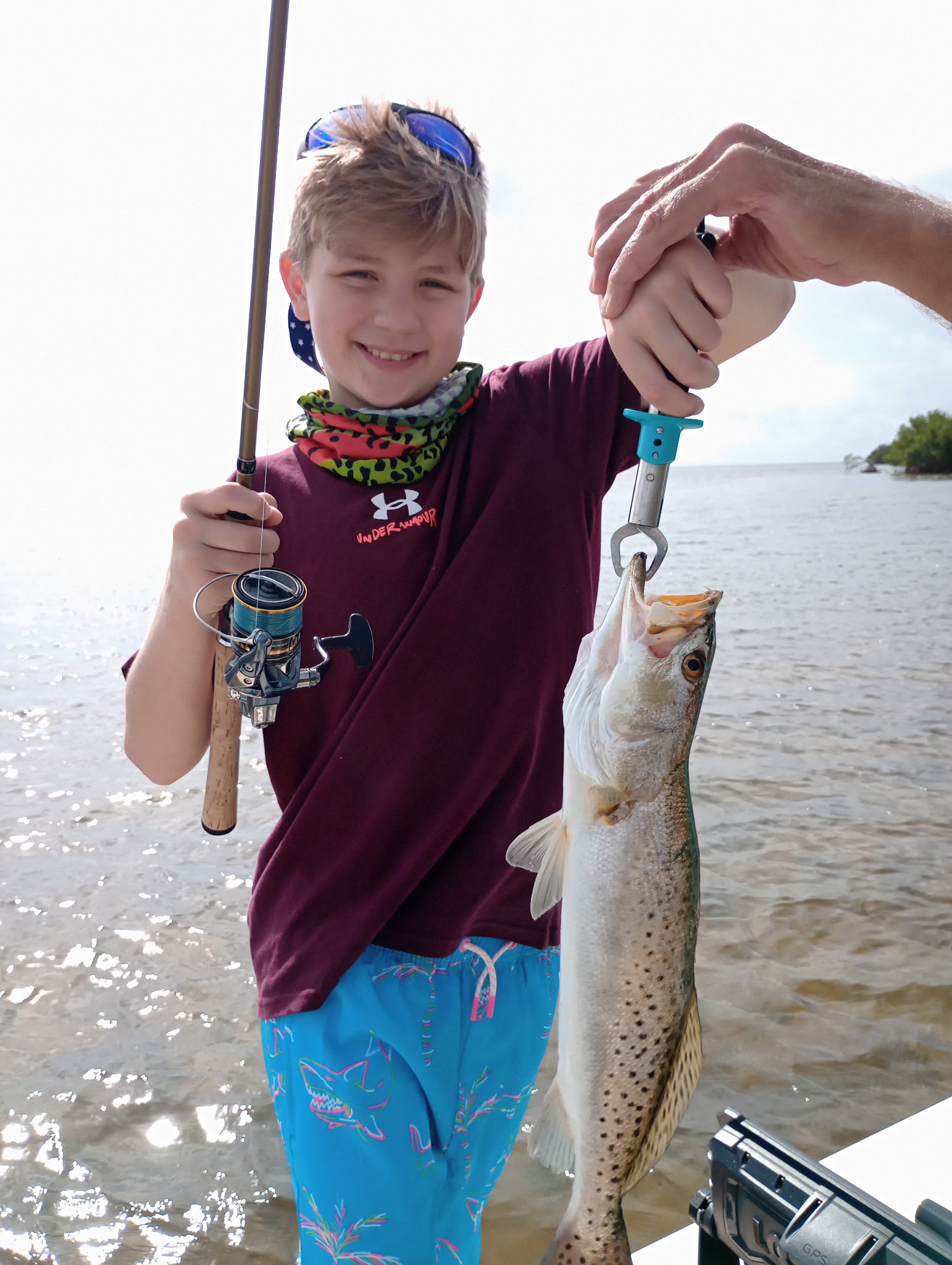
The Spotted Beauty: Chasing Speckled Trout
If you’re looking for the crown jewel of the Florida West Coast flats, you’re looking for the Speckled Trout. These “Spotted Beauties” are a staple on my boat. They’re gorgeous, they’re aggressive, and on a fly rod or light spinning tackle, they put up a fight that’ll have you grinning from ear to ear.
When we’re poling through the grass flats north of Tampa or working the quiet back-country nearshore, this is often our primary target. Here is how we “crack the code” for big gator trout in my neck of the woods.
Understanding the West Coast “Gator” Trout
In Florida, a truly large speckled trout is called a “Gator Trout.” They love our diverse West Coast ecosystem, which is a bit different than the deep bays of Alabama. We’re hunting them in:
-
Expansive Turtle Grass Flats: This is classic flats fishing. I’ll be on the polling platform, looking for “potholes”—sandy depressions in the grass where trout lie in ambush.
-
Mangrove Edges: On a high tide, trout move up against the roots to find shade and easy meals.
-
Oyster Bars and Passes: Anywhere the tide moves water through structure, you’ll find trout waiting for the buffet to come to them.
Tackle and Techniques: The Freeman Style
We keep it light and lean on my skiff. I want you to feel every head-shake.
For the Fly Fisherman (My Favorite)
If you’re game to pick up the fly rod, we’ll be stripping Clouser Minnows or shrimp patterns in tan and white. The key is a slow, erratic strip that mimics a wounded baitfish. Seeing a big trout come out of a pothole to inhale a fly in two feet of water is as good as it gets.
For the Traditional Angler
-
Rods & Reels: I provide high-end medium-light spinning gear. We use 10lb braid paired with a long 20lb fluorocarbon leader because these fish have incredible eyesight in our clear West Coast water.
-
Topwater Lures: There is nothing like a sunrise topwater bite. Walking-the-dog with a Heddon Super Spook Jr. is my go-to for those aggressive morning strikes.
-
Soft Plastics: We use paddle tails and jerk baits on light jig heads. If the water is stained, we go dark; if it’s clear, we go natural.
-
Live Bait: If we’re looking to fill the cooler or get a beginner on the board, a live shrimp under a popping cork is the “Old Reliable” of the Florida coast.
Mark’s Pro-Tips for Success
-
Stealth is Everything: My flats boat is designed to be quiet, but I need you to be quiet, too. No slamming hatch lids or dropping pliers on the deck. Trout have a sensitive lateral line—if they hear us coming, the bite is over before it starts.
-
The “Soft Mouth” Factor: Speckled trout have very delicate mouths (that’s why they’re called seatrout). If you “cross their eyes” with a massive hook set, you’ll tear the hook right out. A firm, steady sweep is all you need.
-
Find the Potholes: On the Florida West Coast, the grass can be thick. I’ll point out the light-colored sandy spots. You want to cast just past the hole and work your lure right through the middle of it.
-
Watch the Birds: If you see terns or gulls diving on the flats, they’re usually over a school of trout pushing bait to the surface.
Why Fish With Me?
My boat is a specialized tool for this specific job. We only fish two anglers at a time, ensuring you get the best casting angles while I maneuver us into position from the polling platform. We aren’t just “fishing”; we are hunting.
Whether you want to catch your first “Gator” on a fly or just spend a morning bending the rod on the grass flats, I’ve got the local knowledge to make it happen. The Florida West Coast is a special place, and the Speckled Trout is the star of the show.
The skiff is fueled, the flies are tied—let’s go find some spots.