
Sheepshead
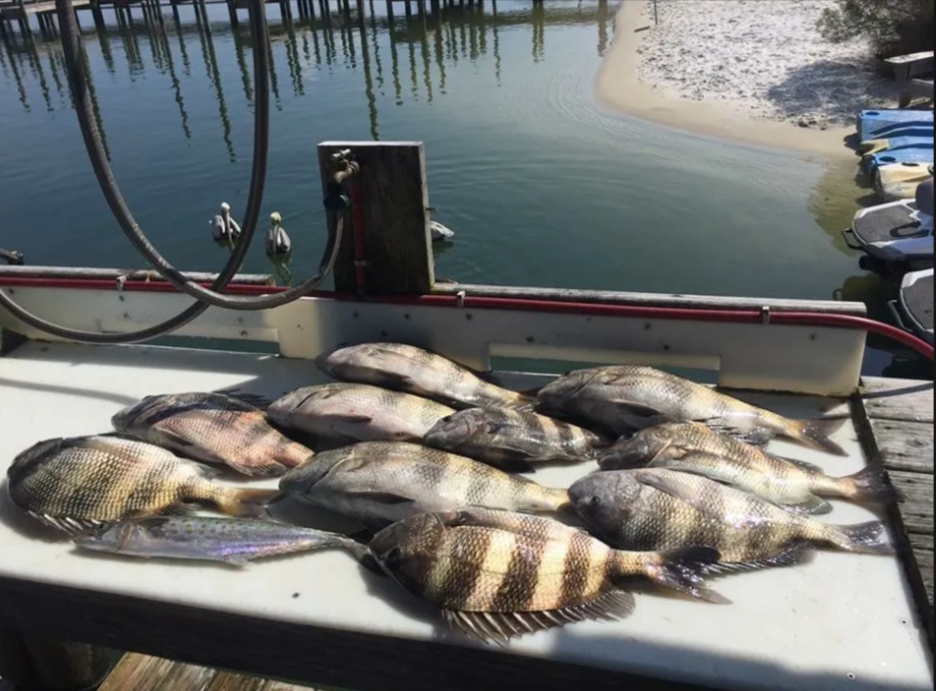
Cracking the Code: West Coast Sheepshead with Mark Freeman
Listen, if you’re looking to test your patience and your hook-set timing, you’ve come to the right place. Most folks overlook the sheepshead because they aren’t as “flashy” as a triple-digit tarpon, but let me tell you, these striped bandits are the smartest bait-thieves in the Gulf. Around here on Florida’s West Coast, we call ’em “convicts”—not just because of the black and white stripes, but because they’ll rob you blind if you aren’t paying attention.
Understanding the “Convict Fish”
Sheepshead are structure-dwellers through and through. They’ve got a set of teeth that look eerily human, designed specifically for one thing: crushing barnacles, crabs, and shrimp. While we’re out on my flats boat, we’re looking for them in the “skinny” salt and brackish waters where they hang out near:
-
Docks and Pilings: This is their bread and butter. They pick barnacles right off the wood.
-
Mangrove Roots: Especially on the high tide, they’ll tuck right into the shadows.
-
Oyster Bars: These are gold mines for sheepshead. The West Coast is littered with them, and they provide the perfect buffet of small crustaceans.
-
Nearshore Rock Piles: When the weather is right, we’ll venture just off the edge of the flats to hit the submerged structure where the bigger “sheepies” congregate to spawn in the cooler months.
The Freeman Approach: Tackle and Techniques
Since I usually have you on my specialized flats boat, we’re fishing in close quarters. Precision is everything.
The Gear: I’ll have you rigged up with a medium-light spinning rod (6-7 foot). We use 10-15 lb braided line because you absolutely need the zero-stretch sensitivity. If you’re using mono, you won’t even know your bait is gone until you pull up an empty hook. For my fly-fishing purists, we can hunt them on the long rod, but you’ve got to be deadly accurate with a weighted crab pattern—right on their nose.
The Bait (The “Good Stuff”):
-
Fiddler Crabs: If a sheepshead sees a fiddler, it’s game over. It’s like candy to them.
-
Live Shrimp: We’ll use small pieces. If you put a whole jumbo shrimp on there, they’ll just nip the tail off and leave you hanging.
-
Sand Fleas: Great for when we’re working the sandy transitions near the passes.
The Rig: I keep it simple: a short fluorocarbon leader and a small, stout #2 or #1 owner hook. We want just enough split-shot to get the bait down to the structure, but not so much that it looks unnatural.
Mark’s Tips for “The Bite”
You don’t “feel” a sheepshead bite like you do a snook. A snook thumps it; a sheepshead inhales it.
-
The “Swing” Rule: You have to set the hook just before they bite. That sounds like a joke, but it’s almost true. If you feel a tug, you’re too late. You’re looking for a slight heavy feeling or a tiny “tick” on the line.
-
Stay Vertical: I’ll pole us right up to the pilings. You want your line as vertical as possible so you can react instantly when they try to wrap you around a barnacle-encrusted pole.
-
Watch the Tail: When I’m up on the platform, I’ll often spot them tailing or hovering near a piling. Sight-fishing for these guys is a blast because you get to watch the “theft” happen in real-time.
Why Fish the West Coast with Me?
Between the mangroves of the backcountry and the oyster bars near the shore, Florida’s West Coast is a sheepshead paradise. Plus, when we head back to the dock, you’re taking home some of the best-tasting fillets in the Gulf. They don’t call ‘em “poor man’s lobster” for nothing—the meat is sweet, flaky, and white, thanks to that steady diet of shellfish.
Ready to see if you can outsmart a fish with human teeth? Step onto the skiff, and let’s go to work.
One party, two anglers, and a whole lot of stripes. Let’s get tight.